
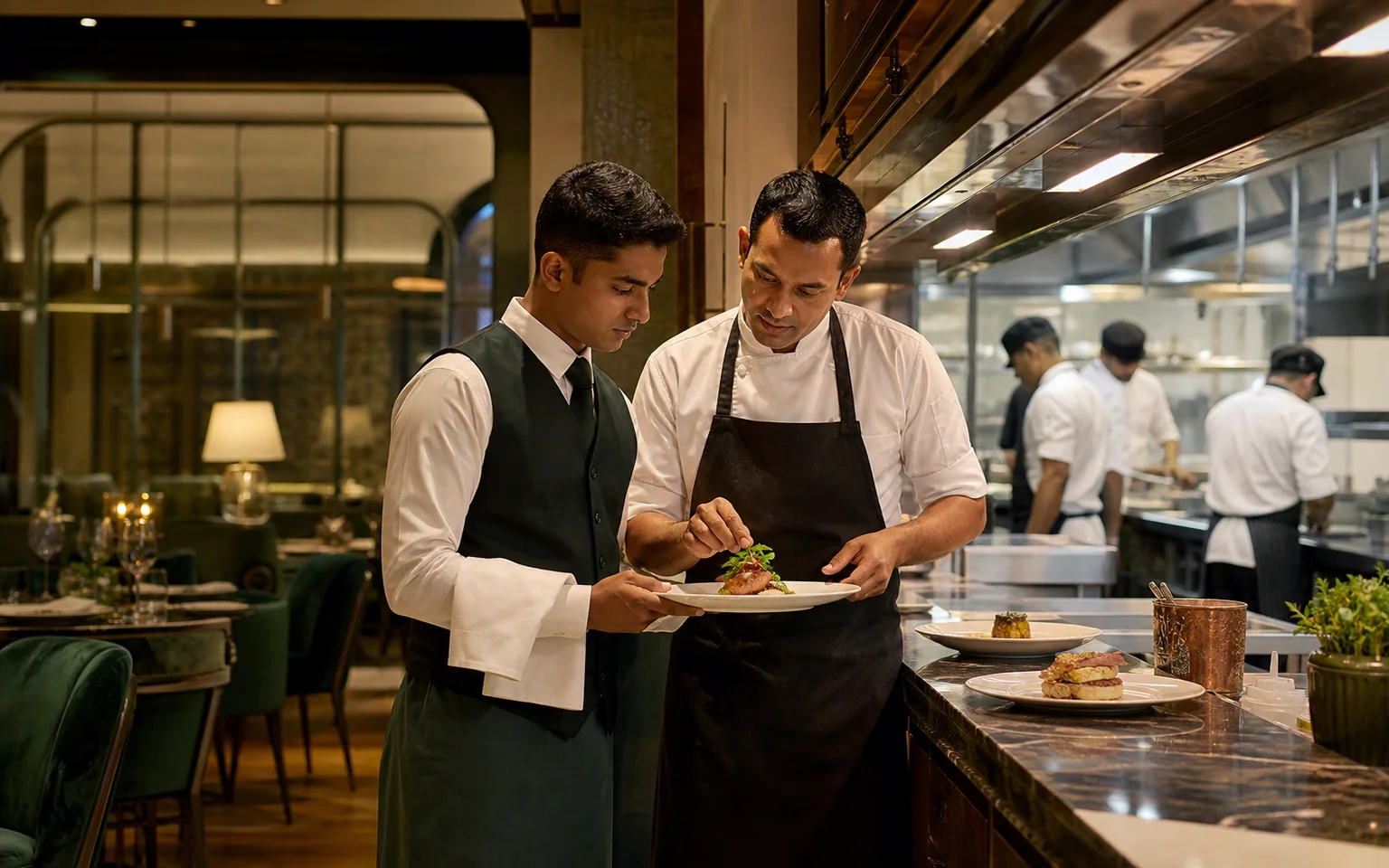
Hospitality offers several practical routes into an international career. A waiter can build strong service fundamentals, move closer to food production and, with deliberate training, progress toward a professional kitchen role. The move is not automatic: employers need proof of technical ability, safety awareness and consistent performance.
Build excellent service fundamentals
Front-of-house work develops timing, communication, product knowledge and attention to detail. Learn the full service sequence, understand menus and allergens, and become reliable during busy shifts. Those habits remain valuable when you move behind the kitchen pass.
Gain real kitchen exposure
Ask for opportunities to observe preparation, shadow a kitchen team or support basic mise en place under supervision. Formal culinary training strengthens the transition, but practical exposure is what helps you understand hygiene, station discipline, portion control and the pace of service.
- Complete recognised food-safety training.
- Practise core knife and preparation skills safely.
- Learn how each kitchen station supports service.
Progress through the right roles
Most candidates develop through junior kitchen positions before becoming a chef de partie. A commis role builds repetition and accuracy; a demi chef role adds responsibility; a chef de partie takes ownership of a station, quality and junior team members. Treat every step as evidence, not simply a title.
Create a credible overseas profile
Record accurate employment dates, responsibilities, training and references. A simple portfolio of dishes can support a culinary application when the images are truthful and professionally presented. Prepare examples that show how you handled pressure, protected food safety and worked across teams.
Choose a verified opportunity
Compare the actual role, salary, accommodation, working hours and progression path before accepting an overseas offer. Verify the employer and contract through official channels and a licensed recruitment partner. A clear first placement should advance your long-term hospitality pathway, not interrupt it.